Downsizing Furniture for Couples Combining Households: Where Do We Start?
Combining two households can feel like a happy puzzle—until you realize you have two sofas, two dining tables, and one apartment. The easiest way to make the move more expensive is to decide what furniture to keep based on attachment, guesswork, or “it will probably fit.” A better starting point is a tape measure and a clear plan.
Before you choose a sofa, measure the apartment’s doorways and the route furniture must take to reach its room. Then measure the rooms, the furniture, and the building access points. Once you know what can fit and how the space will function, you can make thoughtful keep, store, sell, donate, or replace decisions as a team.
Start With the Apartment, Not the Furniture
Get the apartment floor plan if one is available, but verify the dimensions yourself when possible. Floor plans can be approximate, and they may not show details such as a radiator, a door swing, or a narrow turn in a hallway. A few careful measurements can prevent a costly delivery failure or an apartment filled with furniture that leaves no room to move.
Measure the rooms and the usable space
Measure the length and width of each room you plan to furnish. Then note fixed features that affect how furniture can be arranged:
- Windows, window ledges, and heating or cooling units
- Closets, built-ins, columns, and kitchen islands
- Electrical outlets and cable connections
- Doorways, including the direction each door opens
- Walkways between rooms and access to balconies or patios
Sketch a simple floor plan and write the measurements directly on it. It does not need to be an architectural drawing. A clear sketch helps you see whether a large piece blocks a path, covers an outlet, or leaves too little room to open a cabinet or closet.
Think about how you will use each room, not just how many pieces it can hold. A living room needs clear paths for walking and comfortable seating. A dining area needs enough room to pull out chairs. A bedroom needs space to get in and out of bed and open drawers. Measure the apartment with those https://dlf-ne.org/downsizing-checklist-by-room-what-should-you-prioritize/ activities in mind.
Check the route in before discussing sofas
Before deciding which sofa to keep, measure the narrowest doorway it must pass through. Include the apartment entry door, interior doorways, stairwells, elevators, and any tight hallway turns. Record the clear opening—not just the door’s listed size. A door that appears wide enough may have a frame, handle, or closer that reduces the usable space.
Ask the building or property manager about move-in rules and access. Confirm elevator dimensions, elevator reservations, loading areas, stairs, move-in hours, and any requirements for protecting walls or floors. In some buildings, furniture can reach the front door but not make the turn into the elevator or hallway.
Measure the furniture in the dimensions it will travel. For a sofa, record its length, height, depth, and any diagonal measurement that may matter if it needs to be tilted. Check whether legs, backs, cushions, or arms can be removed. A sofa’s dimensions on a product page are not enough to confirm that it can get inside.
For a large item, compare its measurements with the entire route—not just the apartment doorway. If the fit is uncertain, ask the mover or furniture delivery company what measurements they need. Do not make the decision based on a guess. It is much better to discover a tight turn on a measuring tape than on moving day.
Take Inventory Before You Make Decisions
List the major furniture from both homes. Include measurements, condition, and any practical details such as whether a piece comes apart or has sentimental value. The list does not need to cover every small household item at first. Start with the pieces that take up the most room or cost the most to move.
Furniture item Measurements Condition Notes Likely decision Sofa A Length, depth, height Good Fits the entry route; neutral color Consider keeping Sofa B Length, depth, height Fair Large arms; tight elevator turn Consider selling Dining table A Top size; leaf size Good Extends for guests Keep if it suits the room Dining table B Top size Good Similar function Sell or donateUse the inventory to focus your conversation on function and fit instead of on who owned each item first. If both of you want to keep a favorite chair, for example, compare its size, comfort, condition, and use—not just its history.
Use a Keep, Store, Sell, Donate, or Replace System
Give every major item one provisional decision. You can revisit choices after you have a room plan, but an assigned category keeps you from trying to move everything by default.
Decision A good fit when… Check before committing Keep The piece fits, serves a real purpose, and is in good condition. Does it work with the room layout and other furniture? Store The item has strong value or a planned future use, but no place now. Will storage cost less than replacing it, and for how long? Sell It is useful and in saleable condition, but redundant or too large. Can you allow time to list it and arrange pickup? Donate It is usable but not worth the time or effort to sell. Confirm the organization accepts that item and condition. Replace The piece does not fit, is worn out, or does not suit the new needs. Wait until you have measured and lived with the layout.Keep what earns its space
Ask whether a piece is comfortable, functional, in good condition, and likely to suit the new home. Also ask how often you use it. A practical dining table that works for everyday meals may be more valuable than a larger one used only for occasional gatherings. The right answer depends on your routines, not a general rule about what a couple “should” own.
For shared rooms, try to pick one main sofa rather than bringing both sofas and hoping the room can absorb them. Compare size, comfort, condition, and the sofa’s ability to get through the building route. If neither is a good fit, make a plan to sell or https://smoothdecorator.com/my-dining-table-fits-through-the-door-but-leaves-no-space-to-walk/ donate both and shop for a better-sized option after move-in.
Sell duplicates with a deadline
Combining households often means duplicate essentials: sofas, coffee tables, dressers, nightstands, desks, lamps, and dining sets. If a duplicate will not fit or serve a clear purpose, sell duplicates before the move when time allows. Set a realistic listing price and a pickup deadline. If the item has not sold by the deadline, decide whether donation, a lower price, or another removal plan is the best next step.
Do not count expected sale money toward the moving budget until the item has actually sold. And compare the likely proceeds with the time, storage, and hauling involved. An inexpensive piece may not be worth keeping in a storage unit for months.
Store only with a specific reason
Storage can make sense for a valuable heirloom, a piece you genuinely plan to use later, or an item you cannot reasonably replace. It is less helpful as a way to postpone every hard decision. Estimate the full storage cost, including transport and the likely length of time. If the total approaches the cost of a suitable replacement, reconsider storing it.
Choose Furniture That Fits the Room Visually
Furniture can technically fit and still make a small room feel crowded. Scale is about more than a tape measure: it includes how much floor area a piece occupies, how tall it looks, and how much of the room it visually blocks.
Pay attention to visual weight
Deep, bulky furniture with wide arms, dark upholstery, or a tall solid back can dominate a compact room. A piece with raised legs, a lighter frame, slimmer arms, or a lower profile may make more of the floor visible and help the room feel open. That does not mean every small room needs tiny furniture. It means that the size and visual presence of each piece should be balanced with the available space.

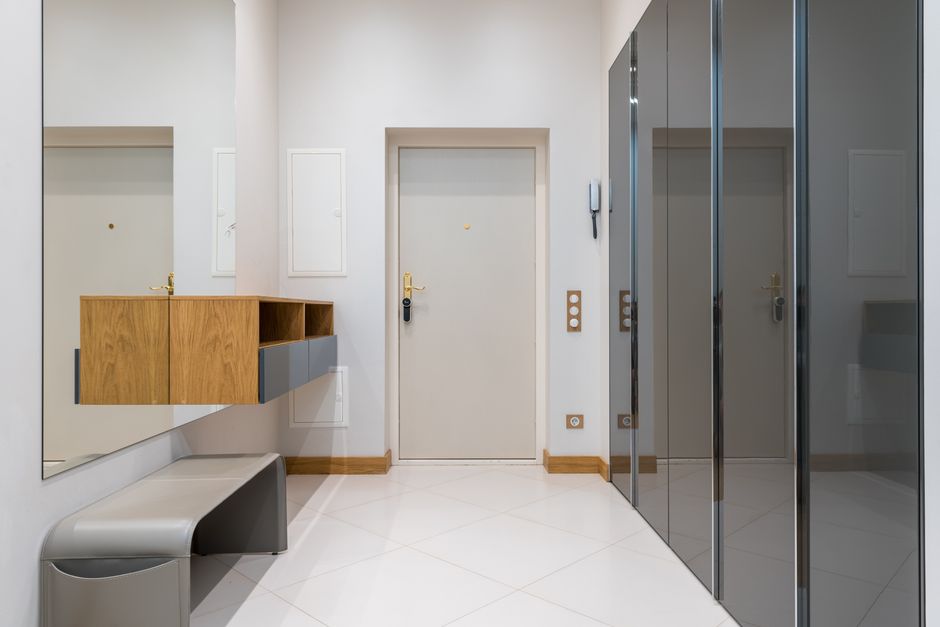
Try to leave clear walking paths and avoid filling every wall simply because it is empty. A room with fewer, well-chosen pieces often works better than one with many items pushed around the edges. Consider whether a coffee table is necessary, or whether a smaller side table could do the job without interrupting the route through the room.
Choose for function as well as appearance
Look for pieces that support how you actually live. A storage ottoman may replace a separate storage chest. A dining table with a leaf can serve daily meals without occupying as much space all the time. A compact desk may be more useful than a large office setup if one person only works from home occasionally.
Before buying anything, sketch the piece into the floor plan or mark its footprint on the floor with painter’s tape. Then check the walking paths, door swings, and access to windows and storage. This quick test is more reliable than judging the room from an online listing or imagining the furniture in place.
Make the Decision Together Without Turning It Into a Contest
Furniture decisions can carry emotional weight, especially when a piece came from family or represents a first home. Give each person a chance to identify a few items that matter most, then evaluate those items against the same practical questions. A shared system can make the discussion feel less like one person is “winning” and the other is losing.
- Agree on the room plan. Decide what each room needs to do before assigning furniture to it.
- Set a space limit. Use the measurements to identify how much furniture the apartment can reasonably hold.
- Prioritize favorites. Each person can name a small number of meaningful or essential pieces.
- Compare duplicates. Keep the better fit for the new home, not automatically the newer or more expensive item.
- Set decision dates. Give selling and donation plans enough time before the move.
If an item is important but does not fit, take photographs and keep a record of its story. That will not replace the item, but it may help separate the memory from the practical question of whether to move and store a large object.
Replace Later, After You Have Moved In
When possible, avoid buying replacement furniture before moving day. Even a careful floor plan cannot show exactly how a room feels once the belongings are in place. Live with the essentials first. Then you can see where you need seating, storage, lighting, or a work surface—and what dimensions will make sense.
When you are ready to shop, measure the intended location again and check the delivery route before ordering. Confirm the product’s actual dimensions, including legs and any required assembly space. Buying after move-in is not an excuse to skip measuring; it gives you better information for the purchase.
A Simple Starting Checklist
- Measure each room and draw a basic floor plan.
- Measure doorways, hallways, stairwells, elevators, and tight turns.
- Confirm move-in rules and building access with the property manager.
- Measure major furniture, including the pieces you hope to keep.
- Assign each item a keep, store, sell, donate, or replace category.
- Choose one main sofa and compare duplicate furniture by fit and function.
- Think about visual weight, walking paths, and how you will use each room.
- Set deadlines for selling or donating items before the move.
- Wait to buy replacement furniture until you know what the apartment needs.
The best place to start when combining households is not a shopping list or a debate over whose furniture wins. It is a measured apartment, a verified route in, and an honest look at how you both want to live. Once you know what fits physically and visually, the keep-or-let-go decisions become much easier—and moving day becomes less of a gamble.