How Do I Use a Furniture Decision Table Without Overthinking It?
A furniture decision table is meant to make moving simpler—not give you one more project to obsess over. The goal is to make a clear, practical choice about each piece before moving day: keep it, store it, sell it, donate it, or replace it later.
After helping renters plan moves for more than a decade, I’ve seen downsizing go sideways for one predictable reason: people decide what to bring before checking what the new home can actually accommodate. A sofa that fits the living room may not fit through the apartment entrance. A dining table that clears the doorway may make the room feel crowded. And furniture bought in a hurry before move-in can turn into an expensive regret.
A simple table helps you separate emotion from practical considerations. The secret is to collect a few measurements, use consistent questions, and make the call. You don’t need to analyze every piece from every angle. You do need to measure first. And before we talk about sofas: what’s the doorway width?
Start With the Apartment, Not the Furniture
Before deciding what to keep, measure the rooms where your furniture will go. Use a tape measure and write down the dimensions. A floor plan is helpful, but don’t rely on a listing photo or a quick glance during a tour. Photos can make rooms look larger, and a few inches can change whether a layout works.
Measure the clear width and length of each room, along with important features that affect placement: windows, closets, door swings, radiators, kitchen islands, and outlets you’ll need to reach. Note where you expect to put the bed, sofa, dining table, and other large pieces. You’re not designing a magazine spread. You’re checking whether there’s enough room to use the furniture and move around it.
Check the route into the apartment
A room measurement is only half the job. Measure the route in, too. Check the building entrance, apartment door, hallways, elevators, stairwells, and any tight turns. Ask the property manager whether there are elevator reservations, move-in hours, protective padding requirements, or restrictions on using stairs. In Houston apartment buildings, the service elevator or loading area may need to be booked in advance, so confirm access before scheduling movers.
For each narrow point, measure the usable clearance—not just the width of the opening on a floor plan. Door handles, trim, handrails, and elevator doors can reduce the space available. If a piece can be tilted or taken apart, check that before assuming it will fit. “It will probably fit” is not a measurement.
Measure the Furniture and Compare the Numbers
Measure each item you might move. Record its width, depth, and height. For pieces that may need to turn through a doorway or hallway, measure the dimensions that matter in those positions as well. For example, a tall bookcase may fit through an opening only if it can be laid on its side. Check whether its shelves or legs come off, and whether the item can safely be disassembled.
Then compare the furniture measurements with both the room and the route in. Leave room to open drawers and doors, pull out chairs, walk around the bed, and use the space as intended. A piece can technically fit and still be awkward to live with.
If measurements are close, don’t guess. Make a cardboard outline on the floor, use painter’s tape, or mock up the footprint with boxes. These quick checks make the size easier to picture and can reveal that a “small” table blocks a doorway or that a deep sofa eats up the walking path.
Build a Decision Table You Can Actually Use
Keep your table short enough to finish. One row per furniture item is plenty. Add the facts that matter to the decision, not every detail you can think of.
Furniture item Fits room? Fits route in? Used regularly? Condition and cost Scale and visual weight Decision Queen bed Yes; walkway remains clear Yes; frame separates Yes, every night Good condition; replacement is costly Appropriate for bedroom Keep Large dining table Not comfortably Yes Occasionally Good condition; takes effort to sell Heavy for the room Sell or donate Extra armchair Maybe; needs a layout test Yes Rarely Fair condition Bulky next to sofa Sell or donateUse simple answers such as “yes,” “no,” or “uncertain.” If the table starts turning into an essay, you’re probably overthinking. The point is to see the trade-offs side by side and make a decision you can act on.
Use a Short Rule for Keep, Store, Sell, Donate, or Replace
For each piece, answer these questions in order:
- Does it fit the route into the apartment? If not, can it be safely disassembled? If neither is realistic, don’t move it as-is.
- Does it fit the room with enough space to use the room? Consider walking paths, doors, drawers, and seating—not just whether the item can be placed inside.
- Is it used regularly? Think about how often you used it over the last six months, not how often you hope to use it someday.
- Is it in good enough condition to justify moving? Consider repair costs, mover charges, and whether you would choose the piece again today.
- Does it suit the scale and look of the new room? A functional piece can still dominate a small space.
Keep
Keep furniture that fits, serves a regular purpose, and is worth the effort and cost of moving. Everyday essentials—such as a bed, a comfortable chair, or a desk you use for work—often earn their place. A piece doesn’t need to be brand-new or perfect; it does need to make sense in the home you’re moving into.
Store
Storage can make sense for a temporary relocation, an item with clear sentimental value, or a piece you expect to use again soon. It is less helpful when it postpones an uncomfortable decision indefinitely. Compare the storage cost over several months with the item’s likely resale or replacement value. If storing it costs more than buying a suitable used version later, storage may not be the practical choice.
Sell or donate
Sell furniture that is in usable condition and likely to find a buyer for a reasonable price. Set a deadline for listing and pickup. If it does not sell in time, consider donating it or arranging another responsible way to pass it on. Donating is often the simpler route for pieces with little resale rentdeals value, especially when the cost of managing a sale outweighs what you might earn.
Replace later
Replacing is a valid decision when a piece is damaged, awkwardly sized, rarely used, or expensive to move compared with its value. But don’t rush out to buy a replacement before you move in. Live with the apartment’s actual light, layout, and daily routines first. Take your measurements, settle in, and then shop for the size that works.
Check Scale and Visual Weight
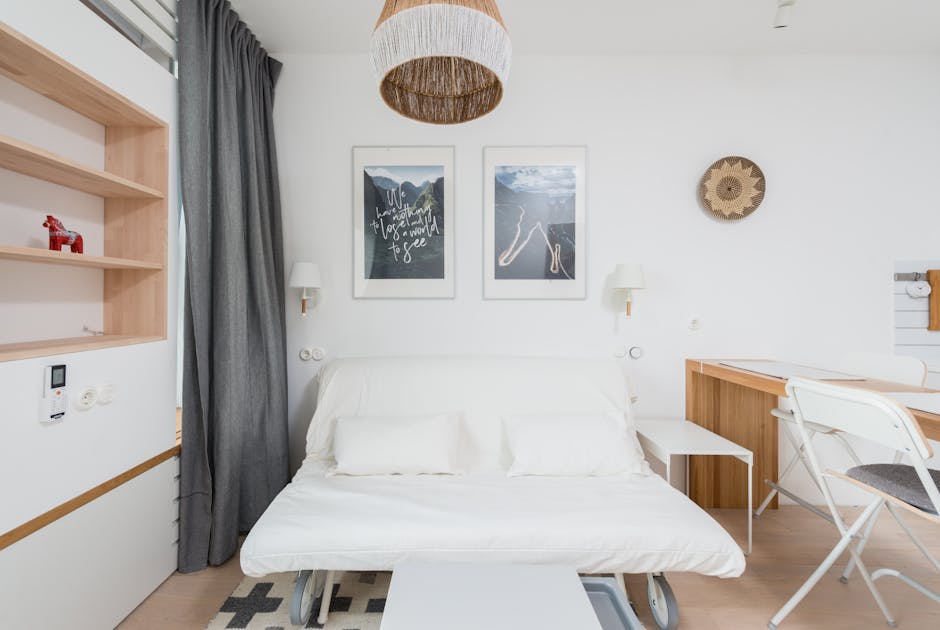
Scale is about how an item’s dimensions relate to the room. Visual weight is about how large or dominant it feels. A dark, solid sofa with broad arms can feel heavier than a sofa with the same dimensions on exposed legs and a lighter frame. Tall storage can draw the eye upward, while a wide, low piece can make a narrow room feel more crowded.
In a small apartment, a few oversized items can use up the room’s visual and physical breathing space. That doesn’t mean every piece must be tiny. It means you should consider the whole layout: one substantial sofa may be fine, but pairing it with two bulky chairs, a large coffee table, and a deep bookcase may be too much.
Try the crowded room test: mark each furniture footprint on the floor with tape or paper, then walk the route you’ll use every day. Can you get from the entry to the kitchen without turning sideways? Can you reach the windows and closet? Does the room still have an open area, or does every surface feel occupied? If the layout feels tight with tape outlines, it will likely feel tighter once the pieces are in place.
Separate Sentiment From Practical Fit
Some furniture has a story attached to it: a family table, a first-apartment dresser, or a chair inherited from someone you love. A decision table shouldn’t dismiss that. It should help you see the practical trade-off clearly enough to choose what to do with care.

Ask yourself whether the memory depends on keeping the whole item. Could you keep one smaller piece, take a photo, or pass the furniture to a family member who will use it? If you genuinely want to store it, include storage costs and a review date in your table. This lets you separate emotion from practical concerns without pretending the emotional part doesn’t matter.
Keep the Process From Taking Over
Use a time limit. For example, set aside 20 minutes per room and make an initial call on each item. Mark uncertain items with a question mark, then revisit only those after you’ve checked measurements or tried a layout. Don’t reopen decisions that already have a clear answer unless new information changes the situation.
- Measure rooms and route clearances before deciding what moves.
- Write down furniture dimensions instead of relying on memory.
- Use “used regularly” as a real test—not a hopeful guess.
- Give sellable items a listing deadline.
- Use the crowded room test for pieces that seem borderline.
- Wait until after move-in to buy nonessential replacement furniture.
Make the Decision, Then Move On
A furniture decision table works when it replaces vague worry with a few useful facts. Measure the apartment, measure the furniture and route in, check how often each piece is used, and consider its scale in the room. Then choose keep, store, sell, donate, or replace later.
You don’t need a perfect decision for every lamp or side table. Focus on the bulky pieces, the expensive pieces, and anything that could create a moving-day problem. Once those are settled, leave room for the apartment to surprise you. A measured plan beats “it will probably fit”—and a home that isn’t overfilled is usually easier to enjoy.