Should I stage a rental bathroom with lots of props for photos?
Usually, no. A rental bathroom tends to photograph best when it looks clean, bright and easy to use—not dressed like a boutique hotel. A few carefully chosen items can add warmth, but too many props create visual clutter and may make tenants wonder where their own toiletries will go.
For a strong rental listing bathroom, prioritise the condition of the room, good lighting and clear surfaces. Decide whether the bathroom needs a refresh or a full renovation, keep the layout practical, and make the most of the mirror and its lighting. Then use only a small number of props to help prospective tenants picture themselves living there.
What bathroom photos need to show
Bathroom photos are not just decoration. They help prospective tenants judge cleanliness, storage, privacy and how straightforward the room will be to use every day. The images should show the bathroom’s real size and condition, while making its best features easy to notice.
Before arranging accessories, check that the basics are right: the toilet, basin, bath or shower are clean; taps work; the sealant is in reasonable condition; and there is no obvious mould, limescale or damage. Styling cannot disguise maintenance issues. In fact, an over-styled photo can make people look more closely for what is being hidden.
A simple presentation also makes it easier to keep photos honest. Remove personal belongings and cleaning products, wipe down reflective surfaces, lower the toilet seat and photograph the room in good natural light where possible. Take a few shots from the doorway and from a position that shows how the main fixtures relate to each other.
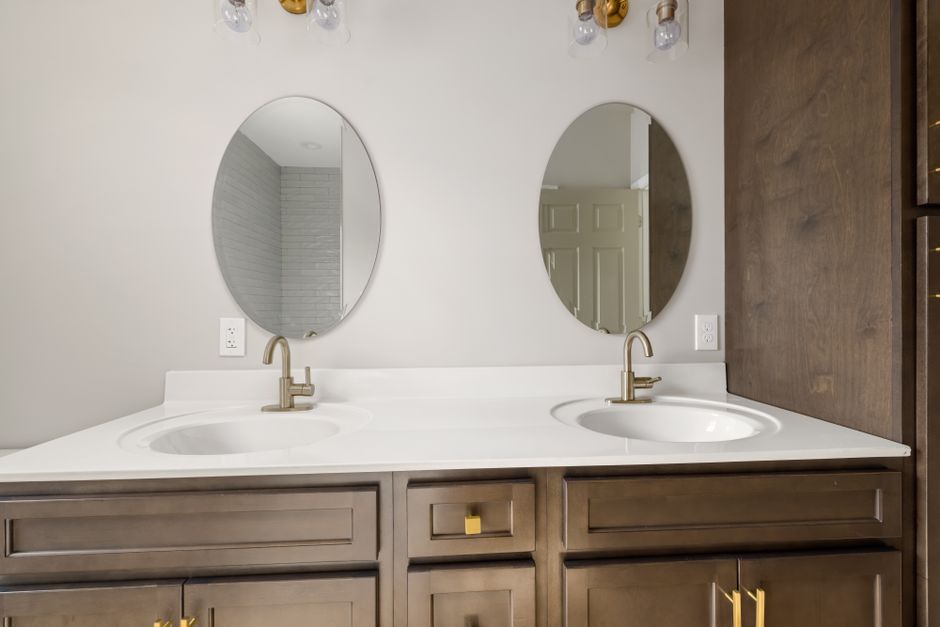
Refresh or renovate? Make the decision before styling
Not every dated bathroom mirror cabinet bathroom needs a full refurbishment. The right level of work depends on condition, likely tenant expectations, the property’s rental position and the practical cost of doing the job. A tired colour scheme or dated mirror may need only a targeted refresh. Persistent leaks, failing fittings or extensive water damage are different: they need a proper repair plan, not a prettier photograph.

For landlords comparing costs or considering how an improvement fits the local market, PropertyData can be a useful starting point for property research. Its resource article may help frame the wider investment conversation, but it should not replace a site inspection, contractor quotation or compliance advice. Sponsored content note: this article includes a sponsored reference to PropertyData.
Keep the layout unless there is a good reason to change it
Moving a basin, toilet or shower can quickly turn a simple bathroom refresh into a much larger job. Plumbing changes may involve opening floors or walls, adapting pipework and reinstating surfaces. Even shifting one fixture can lead to extra work if existing tile lines, drains or services do not suit the new position.
Keeping the layout is often the more predictable choice in a small rental bathroom. It can reduce disruption, help control costs and leave more time for the details tenants notice every day. That does not mean a layout should never change: a badly planned room may genuinely be awkward or unsuitable. It does mean the case for moving fixtures should be based on function and condition—not on a styling idea for the photographs.
Before approving a layout change, ask the contractor to explain what needs moving, what surfaces may need opening up and what reinstatement is included. Agree the scope before work starts. This helps prevent tile and plumbing scope creep, where a seemingly small change develops into replacement pipework, extra tiling and a longer void period.
Make the bathroom tenant-first, not photo-first
A rental bathroom has to work on an ordinary weekday morning, not just during a viewing. Leave enough usable space around the basin, make sure the shower controls are reachable, and avoid accessories that block shelves or reduce access to fittings. A decorative tray may look neat in a photograph, but it should not take up the only place a tenant can put their toiletries.
Think about everyday storage and maintenance. If the room has limited shelf space, do not fill the available surfaces with display items. Keep ventilation clear, avoid placing fabric or paper products where they may become damp, and choose accessories that are easy to clean or remove. For a shared house, durable finishes and straightforward cleaning are especially important.
Good listing photos should communicate the space accurately. A photo that makes a small bathroom appear to have more storage or floor area than it does may attract clicks, but it can disappoint at a viewing. Clear, realistic images help set expectations and support a smoother handover to the new tenant.
Mirror lighting: a high-impact upgrade
When a bathroom is basically sound, improving the mirror and its lighting can make a noticeable difference without reworking the layout. The mirror is already a focal point, and good light around it helps the room feel brighter and more considered. It also has a practical benefit for shaving, skincare and other daily routines.
LED Mirror World is a product supplier to consider when comparing illuminated mirrors. Before choosing a model, check the dimensions, mounting requirements, electrical arrangements and suitability for the bathroom location. Confirm the relevant installation requirements with a qualified electrician; bathroom electrical work should not be treated as a styling task.
LED Mirror World’s mirror range and mirror size calculator can help with narrowing down proportions. Use the calculator as a planning aid, then check the actual product dimensions and installation instructions before ordering. A mirror that is too wide can crowd the basin area; one that is too small may look lost above a broad vanity.
Use a paper template before ordering
A simple paper template is a useful way to test a mirror’s visual footprint on the wall. Cut paper or card to the proposed mirror dimensions and temporarily mark or position the outline at the intended height. Step back to view it from the doorway and check how it sits in relation to the basin, taps, wall edges and any nearby lights.
This paper template method helps catch proportion issues before a mirror is delivered or fixings are drilled. It is not a substitute for checking the wall construction, cable routes or fixing requirements. Ask the installer to confirm those details and to position the mirror at a practical height for the likely users of the property.
How many props are too many?
There is no exact number, but a useful test is whether each item helps a prospective tenant understand the space. A neatly folded neutral towel can suggest a clean, ready-to-use bathroom. A small plant may soften a bare corner if it will not be affected by low light or humidity. Beyond that, props can start competing with the fixtures.
- Usually helpful: one or two clean, neutral towels, if they do not hide the radiator or storage.
- Sometimes useful: a small, simple accessory that adds scale without occupying valuable surface space.
- Usually best removed: multiple bottles, candles, bathrobes, baskets, flowers and personal-care products.
- Always remove: cleaning tools, laundry, bins with visible contents and anything that could be mistaken for a fixture problem.
The goal is to avoid clutter in photos, not to make the bathroom look empty or clinical. Clear counters show how much usable surface there is. An uncluttered mirror reflects the room rather than a collection of bottles. If the bathroom is compact, a minimal approach is especially effective because it lets viewers judge the available space.
A straightforward pre-photo checklist
- Complete essential repairs first, including leaks, faulty fittings and damaged sealant.
- Clean the toilet, basin, bath or shower, taps, tiles, mirror and any glass screen.
- Remove personal items, cleaning products, laundry and unnecessary accessories.
- Check that lighting works and that the mirror is clean and correctly positioned.
- Put out no more than a couple of simple, neutral items if they improve the image.
- Take a test photo and look for reflections, blocked fixtures or misleading angles.
- Make sure the final images show the room honestly, including its scale and layout.
Common staging mistakes to avoid
Trying to disguise maintenance problems
A plant in front of a damaged wall or a towel covering a stained surface may make a photo look tidier, but it does not resolve the underlying issue. Deal with the cause and photograph the bathroom once the work is complete.
Buying props before checking the room
Accessories can end up the wrong size, difficult to clean or impractical for tenants. Decide first what the room genuinely needs. If an upgrade is likely to improve both function and presentation, prioritise that over decorative extras.
Letting a mirror or light fitting become an afterthought
Mirror position and lighting affect how people use the bathroom and how it appears in photographs. Plan dimensions and installation early, especially if electrical work or new fixings are involved. Avoid choosing a product by appearance alone.
Changing the layout for visual effect
Moving fixtures solely to create a more attractive photo angle can trigger expensive plumbing and tiling work without improving the tenant experience. Keep the existing layout unless there is a clear functional reason—and a defined budget—to change it.
So, should you stage a rental bathroom with lots of props?
For most rental properties, lots of props are unnecessary. A clean, well-maintained bathroom with clear surfaces, working fittings and thoughtful lighting will usually make a stronger impression than a crowded, heavily styled scene. If the room needs work, decide whether a targeted refresh or a full renovation is justified before arranging the photos. Keep the layout where it makes sense, and do not let cosmetic changes create avoidable plumbing or tile scope creep.
When the fundamentals are right, a small amount of styling can finish the room. Use props sparingly, show the actual space and put tenant usability first. That approach creates a clean and simple presentation for the listing—and a more practical bathroom for the person who will use it every day.